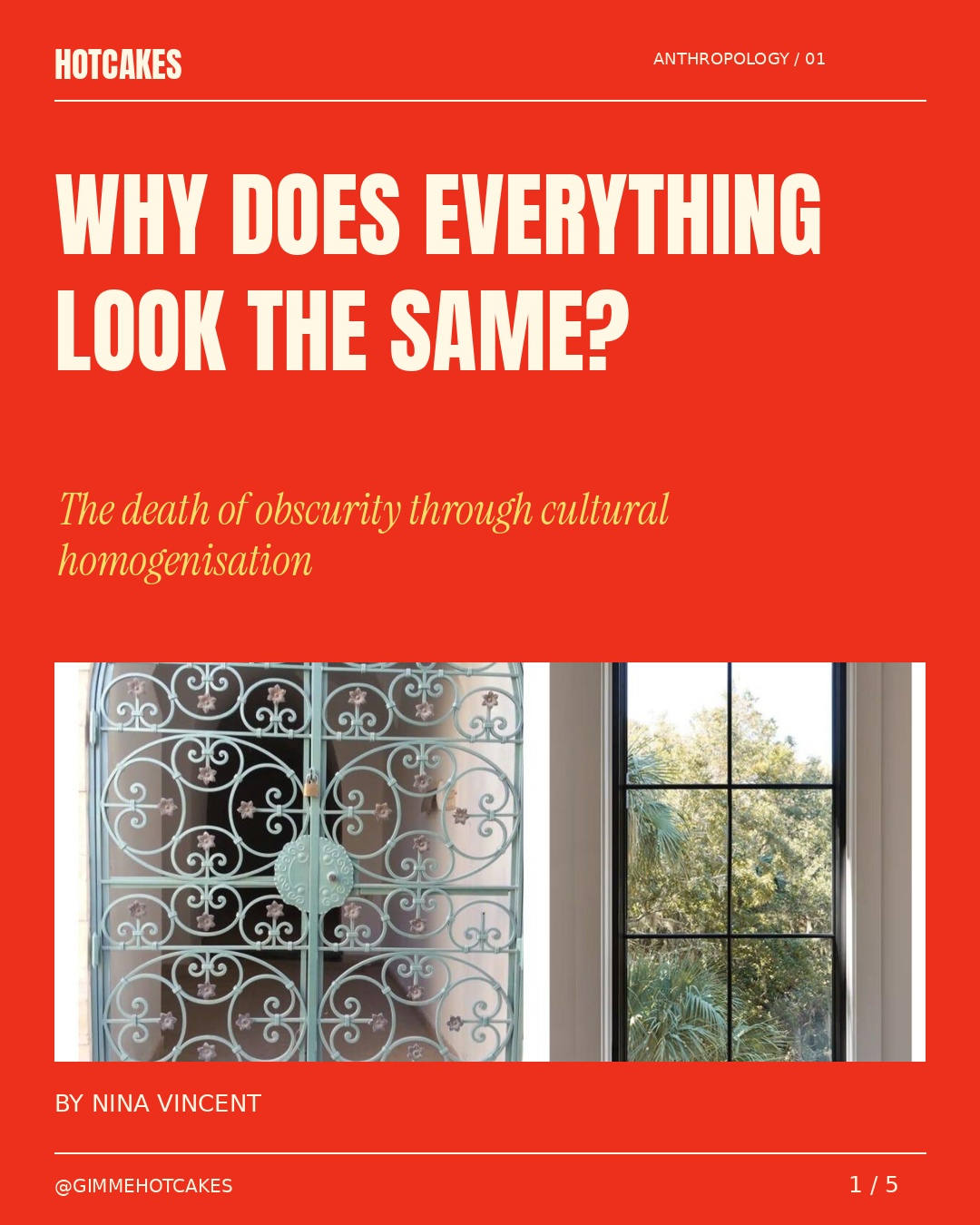
Why does everything look the same?
The death of obscurity through cultural homogenisation

As Capitalism has accelerated and technology has developed exponentially we are now experiencing the effects of homogenisation faster and further than ever. There’s a mass loss of identity. Social media spreads the same values globally, nudging diverse populations toward similar lifestyles. One consequence of globally shared ideals and tastes is that everything is beginning to look the same. We are losing obscurity, and without obscurity, culture can’t thicken into something meaningful. Homogenisation isn’t caused by a lack of difference, but by too much shallow exposure to it.
The death of detail
When was the last time you encountered something truly strange visually on your everyday commute?
The amount of imagination and intricacy put into the design of everyday functional objects is fading as technology reduces the need for it. Devastatingly, craftsmanship is being replaced by convenience. The result may appear to be simplicity and ease, but it’s rewiring our collective creativity and dulling our experience. Design has begun to imitate capitalist values: efficient, productive, and gradually hostile to anything that asks us to slow down and appreciate beauty. We see this in the loss of detail in everything from cars to door handles, but also in websites, brands, and where we choose to eat out.
This lack of beauty and humanity in design produces what Marc Augé describes as Non-places. These are liminal spaces like supermarkets, train stations and airports. Public spaces that you’re not meant to stay in for long, they used to be mediated by people but now are mediated by machines, replaced by financial capital running through systems and algorithms. They radiate a curious emptiness. A depth of social life that would usually fill these spaces is missing so the more people spend in non-places, the more they begin to long for recognition and belonging.
This is why identity-signalling feels so exaggerated now. If you’re not being seen in your external environments, you start to construct ways to be seen more immediately. Identity gets signalled as quickly as possible through the adoption of fashion trends, internet words, or archetypes, seeking recognition rather than allowing your identity to unfold slowly through lived experience and self-inquiry. Rather than just being without performing.
Even language has become boring. The outsourcing of LLMs to write your emails, or worse, your love letters means the same humdrum writing styles are repeated and embedded in culture. In this mass optimisation, we lose unique sentence structures and varied language and so we lose richness and daily poetry. We are at risk of losing the kinds of beautiful phrases that can only be created from an inner translation of human experience. Writing is an act of internal translation. Its beauty lies in its ability to make us feel.
When we describe a house as having character, we're usually pointing to the traces of a life lived there. A house full of character bears the marks of use, memory and personality. When everything becomes neutral and minimal, expression itself begins to disappear.
Cultural flattening
As cultures become progressively connected, local differences begin to fade. The distinct ways people once lived, decorated, dressed and related to the world are gradually replaced by more recognisable, globally shared forms.
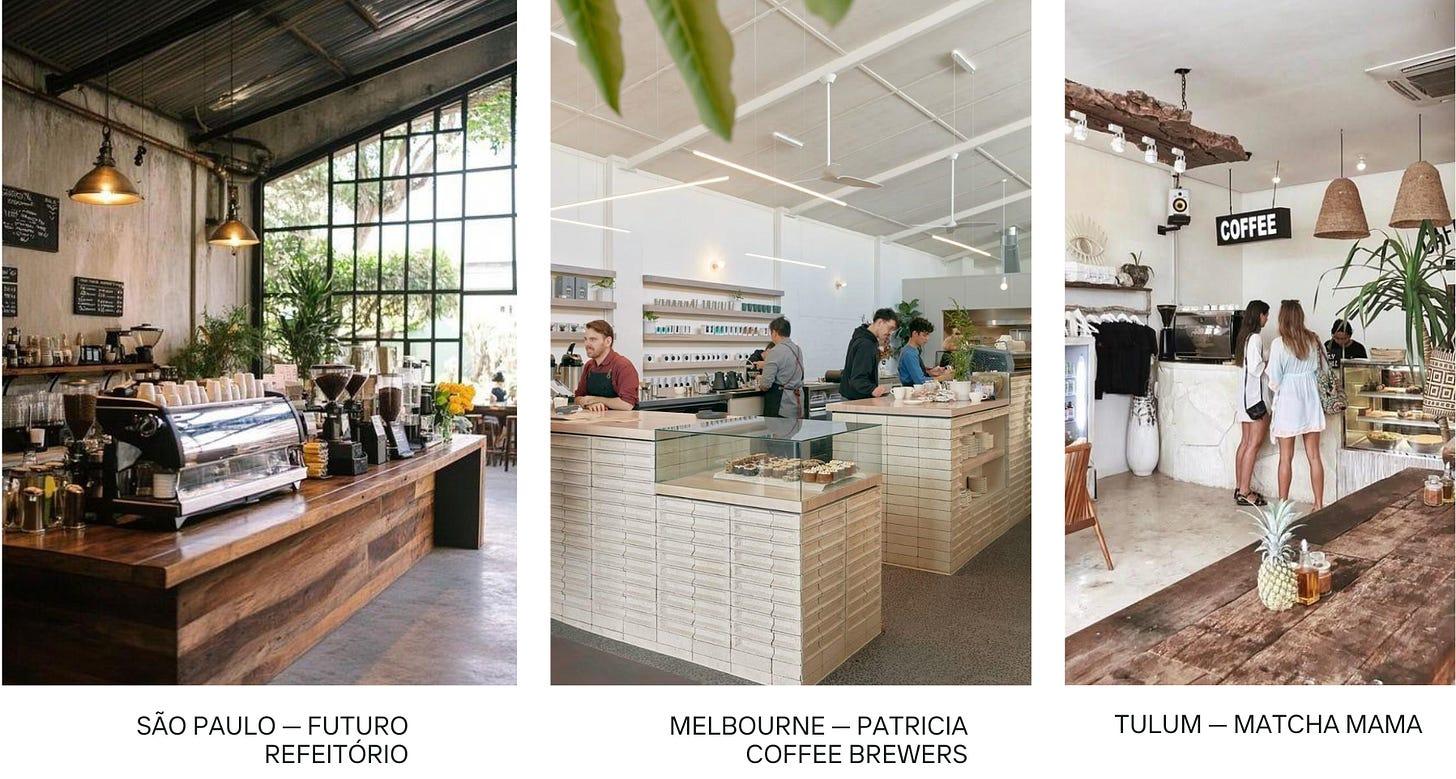
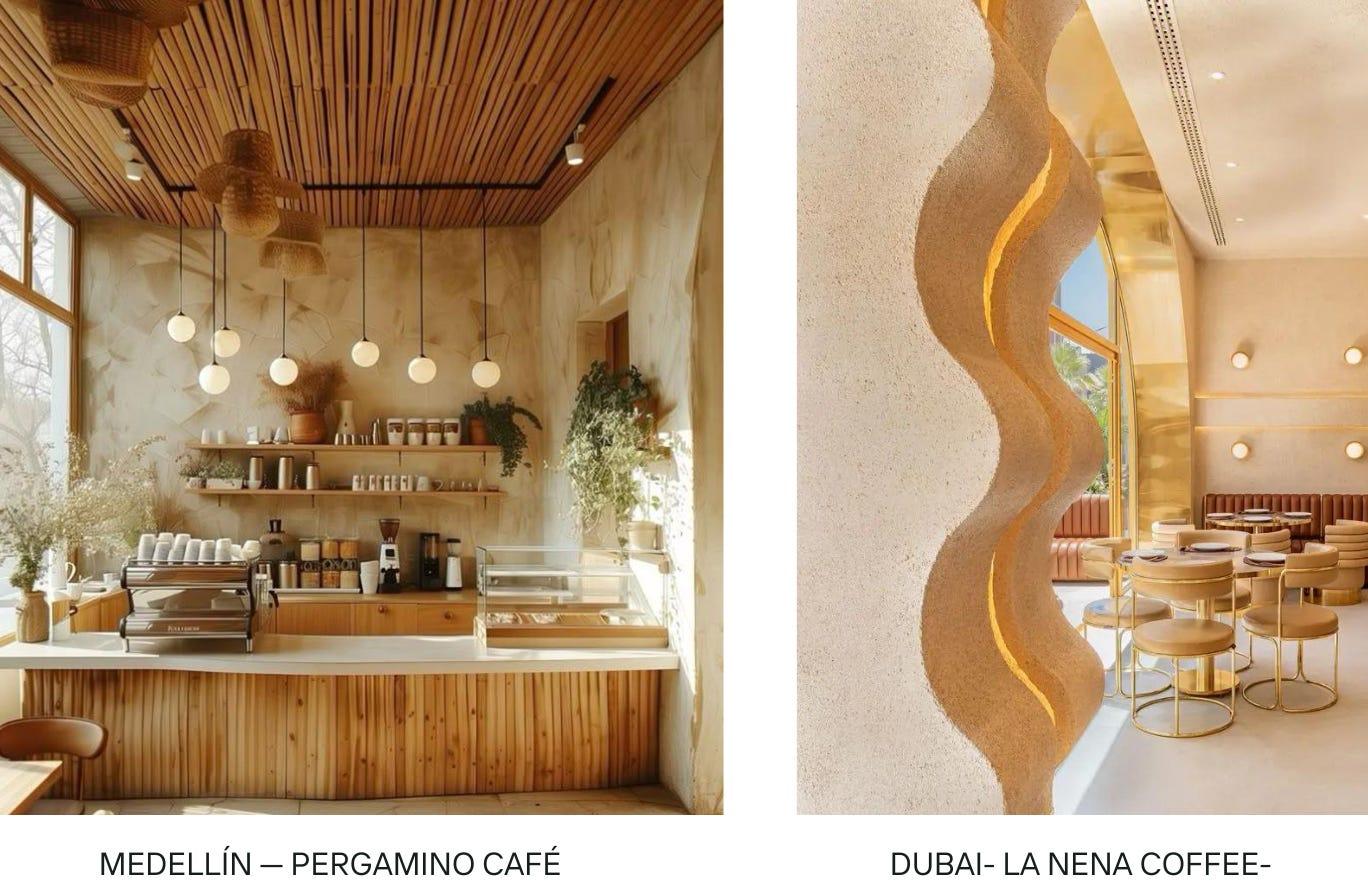
Cultural sameness is flattening local identity. Newly gentrified neighbourhoods increasingly resemble one another. The wine bar with the handwritten logo. Thin-stemmed glasses resting on brushed steel tables. Soft jazz. Small plates designed to share. Limewashed walls, chrome shelving and carefully restrained interiors. Whether you're in Manchester, Melbourne or Mexico City, the visual language remains remarkably familiar. On the surface, an influx of independents appears to improve an area, yet many also overwrite the histories of a place with a globally recognisable aesthetic instead of extending the character already there. As Western tastes travel, the world begins to look more and more monotonous. Authenticity itself has become standardised. The same interiors, menus and design cues now operate as cultural shorthand for taste wherever they appear.
The places we choose to meet, eat and drink have become one of the primary ways taste is performed publicly. Their interiors circulate online as readily as their menus, encouraging a design language that is instantly recognisable and endlessly reproducible.
For example the archetypal Aussie coffee shop—white walls, polished surfaces and wellness-coded menus—can now be found almost anywhere. You could be in Colombia or Indonesia and encounter the same cafés, bars and sushi restaurants clustered around the city's most desirable postcodes. It's why people speak of visiting somewhere before it's "ruined": before commercialisation erodes the textures, histories and peculiarities that once made a place feel unlike anywhere else.
Hospitality has historically offered an antidote to non-places. Hot-spots in an area accumulated character because people accumulated there. They acted as third spaces where a natural community formed. As these spaces become sites to signal identity or aesthetic, that organic collection of people is now a curated group brought together by image, where belonging is based on shared visual taste more than shared experience.
Culture is the human experience that lingers through the ways a place is ornamented, lived in and related to. It cannot be replicated through performance.
A gallery of different worldwide cities, same café…
Faces
After space, after style, the body becomes the next site of sameness and it’s led to the monotony of physical appearance. A new symbol of status in modern society is a symmetrical face that adheres to beauty standards. This mass augmentation of our faces has led to a population of people who all have the same desired look and the homogenisation of faces. These standards privilege a Western ideal: symmetrical features, smaller noses and faces that conform to a narrow vision of beauty. In the process, many non-Western features become positioned as flaws to be corrected rather than differences to be valued. Enhancements are no longer exceptional but expected. Self-improvement blurs into something closer to optimisation, even trans-humanism, where the aim is not expression, but refinement toward a shared ideal.
Embrace your obscurity
While everything does look the same, you can still choose to embrace your own intricacies. Like a building or design you can choose to be detailed, you can follow intricacies that interest you and through actively choosing to spend time among things that spark you, you become a channel of expression for them. Invite space into your life for you to be inspired by things. Create immaterial meaning rather than exclusively sourcing it from the physical realm. Be comfortable expressing without immediate understanding. If so much of the speed of cultural flattening comes from a deeper desire to be recognised, begin by slowly recognising yourself. Originality can only arise from curiosity and feeling safe in your expression.
To protect obscurity is to protect the possibility that somewhere, something genuinely different can still emerge
Comments (0)
Loading…
No comments yet.